Look Back to Look Ahead

Today marks an exciting time of the year. Sure, it is when folks are celebrating with family and friends over the Christmas and New Years’ break. True, it is a time to demonstrate to those we love that we love through acts of kindness and selflessness. Yet, what makes this a particularly exciting time of the year is the Sleep Ecophysiology Group’s year-end wrap-up as we Look Back to Look Ahead!

The composition of the Group has changed markedly in 2024. Erika Zaid became Dr Erika Zaid after the successful review of her dissertation, To sleep or not to sleep: Can mating dasyurids provide insight into the evolution and function of sleep? Before doing so, Erika earned herself a very nice first-author paper in Current Biology on sacrificial sleep by male antechinus during the breeding season, for which she used a variety of techniques including video, accelerometry, electrophysiology, endocrinology, and metabolomics. Her work was featured in Nature, Science, The New York Times, and a smattering of other media outlets.

Hannah Elmes joined our group in 2024 to do her Honours. Working closely with the histology experts (Shaun Collin, Caroline Kerr, Timothy Roth), Hannah produced an original Honours thesis on “Age-dependent changes in neuron count and volume in the hippocampal formation of racing pigeons (Columba livia)“. To do so, Hannah had to learn to section, mount, stain, and count (using unbiased stereology) pigeon brains along an age gradient. Hannah earned an exceptionally high grade of her efforts (91%) and was offered both a MSc and PhD scholarship by the university. Fortunately, Hannah took the latter and joins us in February 2025 to start her sleep-centric PhD. Welcome, Hannah Elmes BSc (Hons)!

Also joining the lab as members external to La Trobe are:
Ethan Renner working primarily with Craig Radford at the University of Auckland. Ethan will study the physiology of sleep in cartilaginous fishes, which builds on our largely behavioural work with this group of animals (and also on our “mixed-success attempt” at electrophysiology that we published in 2024). The fingers-crossed aim of his PhD will be an understanding of how sharks that do not stop swimming (so-called ram ventilating sharks) sleep. Welcome Ethan!

Vincent Knowles based with Raoul Mulder at The University of Melbourne. Vincent is no stranger to the lab, having done his MSc with Raoul, Anne (Aulsebrook) and me on the spatial and temporal ecology of wild black swans. Vincent now applies those skills to the study of Cape Barren geese on Phillip Island. The geese are stunning: light grey backs, a bill the color of key-lime pie, and black feet leading to red legs that gives the appearance they are wearing socks. But lo! The geese are abundant on Phillip Island (and some say too abundant) such that tension exists between farmers and hungry geese. Vincent will provide some of the first data on where the geese go, when, and what do they do once they are there. His project is co-funded by Phillip Island Nature Parks. All of us hope for sleep-related insights that may lurk in his accelerometry based data.

And so, in 2025, the lab will consist of Hannah (based at La Trobe), Ethan and Vincent. Keen to join? An e-mail is a good place to start.

Some of our alumni have important news to share as well. Anne Aulsebrook returned from her Marie Curie postdoc in Germany to land an Alfred Deakin Fellowship at nearby Deakin University working with Kate Buchanan. Off to an enviable start, Anne also secured an Australian Research Council (ARC) Discovery Early Career Researcher Award (DECRA) which affords her a three-year salary to conduct research. Robin Johnsson finished his postdoc at Franklin & Marshall College (USA). Robin returned to his native Sweden to score the sleep of young and aged pigeons, and to plan his next steps. It is noteworthy that Robin had a first-author quick guide in the journal Current Biology this year, and a co-first author paper in Biology Open. Shauni Omond has enjoyed her first one-half year at Harvard University / Brigham and Women’s Hospital where she now studies the relationship between performance in non-flatworm (human) athletes and sleep. Shauni had two first-author papers in 2024 (on flatworms) in the Journal of Experimental Zoology A and the Journal of Comparative Physiology B.

One final thing to mention on 2024. Much of my own 2024 was spent in my living room reading, writing, and meeting electronically with Barrett Klein (University of Wisconsin, La Crosse) and Niels Rattenborg (Max Planck Institute for Biological Intelligence). The three of us were contracted to write a book dedicated to the comprehensive coverage of sleep in animals. Being one of the most rewarding experiences of my professional life, I am indebted to these two gents for the opportunity. The submitted draft is now in safe editorial hands and should be available in the second half of 2025 with the provisional title, Somnozoology: Sleep Across the Animal Kingdom.

Well done All on a successful 2024 with green shoots for success in 2025! Happy Holidays!
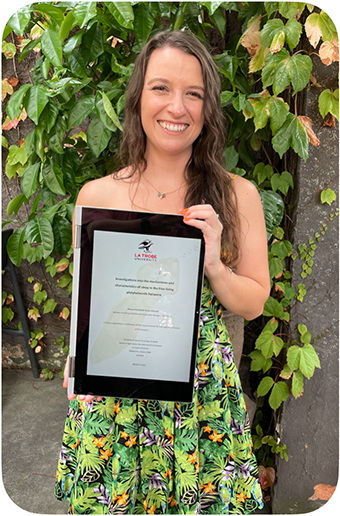
Introducing Doctor Erika Zaid, PhD

It is my pleasure to let you know that Erika Zaid’s PhD dissertation, “To sleep or not to sleep: can mating dasyurids provide insight into the evolution and function of sleep?” was passed with minor amendment. She will have her PhD conferred in December.

Erika moved from Italy to Melbourne in 2016 with one very large bag strewn over her back. From Mediterranean climes, she embarked on her first field season in the cold, wet, and occasionally snowy, Otways on the hunt for mainland dusky and agile antechinus. Over two field seasons and leading a team of volunteers, Erika collected activity data on antechinus housed in large, naturalistic enclosures in the Otways to measure sleep & circadian activity rhythms of males and females. As you know from Pat Woolley’s work, antechinus males enjoy only one breeding season and then die in a specular mass-death. Erika wanted to understand how sleep changed in males in response to their looming demise. Using diverse techniques, from filming and accelerometry to endocrinology, metabolomics and electrophysiology, Erika showed that male, but not female, mainland dusky antechinus reduce sleep by 3-h per night, every night, for 3-weeks. In humans, this level of chronic sleep restriction would impair performance. Erika travelled to The Netherlands to use a novel method measuring blood levels of a metabolite, oxalic acid, that is reduced in sleep deprived rodents and humans. In doing so, she provided hints that wild antechinus might be sleep deprived, too. For her multi-year, multi-method study, Erika was rewarded with a paper in the journal Current Biology (Zaid et al., 2024) that attracted much national (ABC, radio) and international attention (Nature, Science, New York Times and others). Equally as important, prior to this paper, Erika brought antechinus into the lab (at La Trobe) for recordings of brain activity. This was one of the first detailed electrophysiological sleep studies on a marsupial, and truly the first to see how sleep is regulated in any marsupial. In doing so, Erika kept antechinus awake for a few hours during the day, and found they have increased sleep intensity when allowed to sleep freely, not unlike your own response after one-too-many episodes on Netflix. A surprising thing arose, unlike other mammals who have few sleep bouts packaged in tens of minutes, or hours, of continuous sleep, antechinus package their sleep much as birds do: hundreds of short sleep bouts, each tens of seconds long. This is a level of sleep fragmentation hitherto unknown for a mammal. Here, Erika was again rewarded with a paper in our top, aptly-named journal, Sleep (Zaid et al., 2022). Erika is pursuing two more papers, one on circadian activity rhythms in fat-tailed dunnarts and another on how lunar phase influences activity in antechinus, which will add to her growing arsenal of original papers. For all her successes, please join me in Congratulating Doctor Erika Zaid!

RE:view 2023

Dear Sleep Friends,

We are (over)due for a Year-end Re-cap on the successes of the Group in 2023 with a hint of what’s-to-come in 2024. I realise the temptation is strong to scroll this long post, searching for gems. Resist! Gems abound, and there is much to learn in this exercise of excellence on display. And so, in order of scholastic seniority, let me please bring your focus towards…

Doctor Shauni Omond. Dr Omond had her PhD conferred at a university ceremony on December 13th. It was there Shauni gave a stirring address to the other 36 newly-minted doctors and received the Nancy Millis Medal for a dissertation of outstanding quality and contribution. Additionally in 2023, Shauni published a paper in the Journal of Biological Rhythms and showed that losing your head does not mean losing circadian rhythmicity*. She also contributed a paper to the Journal of Comparative Physiology B on the value of flatworms as an emerging model for sleep research (viewed more than 2,600 times). In October, Shauni travelled to the Gold Coast to attend Sleep DownUnder. There she delivered poster and oral presentations. Next year will see Shauni publish the final paper of her PhD on the effect of neurotransmitters on flatworm metabolism. She will also continue work with A/Prof Matt Driller on environmental consequences on human sleep and performance in Olympic athletes. No doubt Shauni will continue her steep ascending trajectory and secure a postdoc of her choosing. Congratulations, Dr Omond!
(*in flatworms)

Erika Zaid submitted her PhD for peer-review on November 30th! Erika started with us in 2016 and accomplished much in that time. Two intense field seasons studying the behaviour and physiology of breeding antechinus in para-wild and eu-wild environments, followed by marriage, Baby Louie, (Big Fred), and tireless (and tireful) rearing. Importantly, days ago, Erika had accepted the second first-author paper of her dissertation. This paper, in press at Current Biology, uses [under embargo] to show that these [redacted]. This sustained level of [redacted]. Amazing! Erika is now working on two other papers which should see daylight in 2024. In addition to these large successes, Baby Louie is now fluent in English and Italian and we’ll count his successes as hers. Congratulations, soon-to-be Dr Zaid!

Vincent Knowles. A dark horse in the lab as he is based with Prof Raoul Mulder at The University of Melbourne and co-supervised by Dr Aulsebrook in Germany. Still, Vincent had a year worthy of the spotlight. Vincent has been using cool tech to look at behaviour and spatial ecology of wild black swans, mostly in Albert Park Lake. Vincent was interested in using accelerometers and GPS to determine the time budgets of wild swans, continuously for months. He could train an algorithm to extract specific behaviours from accelerometer squiggles, such as preening, resting and foraging. In doing so, Vincent presented two chapters: (1) he showed that pair-bonded swans show great variation in how (physically) close they are to one another, across days and a year and (2) that newly-wed swans do not get closer to one another than swans enjoying their golden years together. They don’t coordinate activity or specific activities. He also provided the first quantification that non-breeding males, which are arrhythmic, become nocturnal with the appearance of the egg and day-time incubation duties. Conversely, females become diurnal and incubate at night. For his efforts of long-hours over months spent intensively monitoring wild swans, together with a stellar thesis, Vincent earned a high grade on his MSc and has secured a PhD scholarship at The University of Melbourne. In 2024, Vincent will work on Phillip Island working with Cape Barren geese. Beautiful, yet enigmatic and phylogenetically unique, Cape Barren geese are over-abundant on the Island and causing tension with locals, notably farmers. Vincent will soothe the tension by providing data on basic natural history and spatial ecology of geese. Great work, Vincent!

Sophia Lee. Sophia joined us from California at the beginning of this year. Following her trans-hemispheric relocation, she moved to Geelong for her Honours work on fiddler rays housed at the Queenscliff Marine Research Station. Working largely independently, Sophia provided evidence that restful rays are less responsive to tactile stimulation than recently active rays. By itself, this observation suggested that rays sleep not unlike other animals. However, two sleep deprivation studies did not reveal evidence for sleep homeostasis. This either suggests that sleep is regulated differently in rays or, perhaps more likely, that our assumption that inactive rays are always asleep is unlikely to hold. Thus, rays and other cryptic animals might challenge the behavioural characterization of sleep used since the days of Henri Piéron (1913). Nicely done, Sophia!

Hannah Elmes. I’ve known Hannah since first-year Ecology, Evolution & Biodiversity (BIO1EEB), through second-year Animal Physiology (ZOO2AP), and the Heron Island first course (ZOO3HIF). Hannah is impressive. Curious and careful. Organized and engaged. In 2023, Hannah completed her BSc. After regularly getting amongst the highest grades in each subject, Hannah finishes her degree with a WAM above 90%. This remarkable achievement is punctuated by her first publication in the Journal of Thermal Biology, in which Hannah quantified thermal profiles of sunning birds. Fortunately for us, and hopefully for her, Hannah will continue with the group in 2024 as an Honours student working with histological analyses of young and aged pigeon brains, supervised by A/Profs Richard Peters and Matt Hale (La Trobe University), Prof Tim Roth and Dr Robin Johnsson (USA). Well done, Hannah on your sustained successes and Best wishes for more!

Poppy Veillet. Like Hannah, I’ve known, taught, and worked with Poppy for three years. Like Hannah, Poppy was a stand-out student from first year biology and someone everyone would want to work with. Keen. Passionate. Dedicated. Resilient. She worked in the lab, with intermittent pay, and more often volunteered time to collect data on the cognitive performance of wild Australian magpies. While Poppy earned her BSc this year, she also saw publication of her first paper. In Behavioural Ecology and Sociobiology, working alongside Dr Robin Johnsson, they showed that wild magpies can be taught to pull an intact string to obtain a food reward, but can also discern this intact (functional) string from a cut (non-functional) string. Whether this is a case of relatively simple associative learning or complex causal reasoning is unclear, but magpies seem to be capable of greater mental feats than previously recognized. Next year, Poppy and her partner, Jesse, depart Australian shores for the United States, South America, then Canada. After this, Poppy plans for a MSc leaving little doubt of future success.

And now news from the Somnophilic Alumni!

Dr Annie Aulsebrook flew to Germany to take up her Marie Curie Fellowship during early COVID days of 2020. During some of that time, I had the honour of being her field tech (2022) and psychology patient (2023) with work on pectoral sandpipers in Barrow, Alaska. She also had a paper recently published in Animal Behaviour (Aulsebrook AE, Jacques-Hamilton R, Kempenaers B. Quantifying mating behaviour using accelerometry and machine learning: challenges and opportunities). In February 2024, she blessedly returns to take up an Alfred Deakin Postdoctoral Fellowship based at Deakin University in Geelong to work with Prof Kate Buchanan. Congratulations, Annie, on this second postdoc and, more importantly, returning home.

Drs Robin Johnsson and Farley Connelly, both located in the United States, albeit on opposite coasts, have continued to work together. Either because of mutual respect and admiration or blackmail, their string of successes continued unbated. In the January issue of Current Biology, you will soon see a Quick Guide on Australian magpies featuring much of their research over the last four years. Next year will see Robin securing a second postdoc in either the UK or (hopefully) back in Australia, and Farley should have a great year with two more pubs: one on the increasingly well-studied Australian magpie and the other on…. pigeons! Indeed, Farley, Robin, and Hannah are the latest members to join the Pigeon Train – the researchers that have discovered the advantages, nay the love, for pigeons. Welcome Aboard. Choo choo!

That’s it for the re-cap, my friends. I look forward to seeing more successes as this year unfolds.

Introducing Doctor Shauni Omond, PhD

Dear friends,

These are the moments that matter most. It is my pleasure to announce that Shauni Omond’s PhD entitled, “Characteristics and mechanisms of sleep in the free-living platyhelminth flatworm” was passed following peer-review without the need for any amendments. Incredible!

Shauni is well known in our School of Agriculture, Biomedicine & Environment. She served as the Departmental Post-graduate Student Representative for Ecology, Environment and Evolution, and later elevated to the School Representative. She has worked with Heads of Department, the School Executive, and the Graduate Research School as a colleague and selfless ambassador for the interests of post-graduate students.

During her time at La Trobe University, Shauni conducted wholly original research. When Shauni started in the lab as an Honours student in 2015, our understanding of sleep was limited to vertebrates, a handful of arthropods and mollusks, and C. elegans. All other animal phyla (32 or so at that point) had been unstudied.

Shauni opted to explore the presence and regulation of sleep in an animal untapped by sleep scientists: free-living platyhelminth flatworms. In a series of behavioural assays, Shauni demonstrated that restful flatworms are sleeping flatworms as reflected by postural changes, reduced responsiveness, and homeostatic regulation (Omond et al. 2017 Sleep). This paper constituted the high-impact output of Shauni’s first-class Honours thesis. It is noteworthy that at the time of her Honours submission, data collection for the sleep deprivation study was incomplete and, to her great credit, Shauni remained in the lab for another four months to ensure high-quality data worthy of publication.

For her PhD (2018-2023), Shauni delved into the physiology underlying the sleep state of flatworms. Most impressively, she created a method to administer neurotransmitters to flatworms, and did so, for four neurotransmitters that promote wakefulness in mammals (acetylcholine, dopamine, glutamate, histamine), and three that induce sleep (adenosine, GABA, serotonin); she also gave flatworms the histamine receptor antagonist, pyrilamine. Each compound was given at concentrations spanning at least three (and often more) orders of magnitude. Total sample size: 504. Ultimately, she found that simple flatworms bear a simplified complement of neurotransmitters, with only three of them regulating sleep/wake states. Still, those three (dopamine, histamine, GABA) had an evolutionarily conserved effect on sleep/wake states across flatworms, fruit flies, and various vertebrates. The result for her? A second paper in our highest impact journal (Omond et al. 2022 Sleep).

A wonderful, ancillary value of this paper is that her work provided a means to reduce, and augment, sleep in flatworms pharmacologically. Shauni sought to measure the metabolic consequences of sleep using a Seahorse respirometer. Consistent with energy savings observed during sleep in other animals, GABA-treated flatworms showed reduced oxygen consumption relative to flatworms exposed to (wake-promoting) dopamine, and animals exposed only to untreated spring water (Omond et al. in preparation). Thus, the behavioural restfulness that characterises sleep in flatworms is mirrored by physiological downregulation.

Shauni went on to explore a peculiar ability of flatworms: their remarkable ability to regenerate the entire animal from mere slivers of the parent. To do so, Shauni measured daily activity patterns of intact flatworms and then again after decapitation in headless tails and tailless heads, and again still in regenerated animals. She found that each one-half of a flatworm retains (1) the ability to move and (2) their nocturnal lifestyle (Omond et al. 2023 J Biol Rhythms). Shortly after data collection was complete, a paper published in PNAS found that flatworms sense light using their well-known eye-spots in their head, but also extraocular photoreceptors diffusely located across their body. And so, Shauni had described the behavioural output arising from these photoreceptors.

To advertise the importance of her findings, and explain the promising future of flatworms in sleep research, Shauni summarized her studies in a review paper (Omond et al. 2023 J Comp Physiol B). In addition to these efforts, Shauni also co-authored two other papers: one on the experience of PhD students during COVID-affected years (Atkinson et al. 2021 High Educ Res Dev) and another on the role of sleep tracking technology for (non-flatworm) professional (human) athletes (Driller et al. 2023 Sports).

Together, these seven papers involved her forming collaborations with members of the School of Psychological Sciences (Matthew Hale), School of Allied Health (Matt Driller), and SABE (Paul Fisher, Sarah Annesley, Oana Sanislav).

Her efforts were recognized by two referees that passed her PhD without changes, with one of them stating:
I congratulate the candidate on producing some exceptional and very interesting work that has a huge amount of potential for the understanding of sleep and circadian rhythms in the future. I particularly enjoyed reading a thesis about a critter that was not a genetically manipulated rat or mouse, what a breath of fresh air!

Congratulations, Shauni Omond, PhD! I can’t wait to see what comes next for you.

Welcome Sophia Lee!

Earlier this month, we were joined in Melbourne by Sophia Lee: A new Honours student from California. Bristling with potential and enthusiasm, Sophia will conduct research into the significance of rest in fiddler rays. Based (mostly) at the Queenscliff Marine Research Station, she will conduct behavioral assays on captive rays to determine when they are asleep. Notably, there is presently no evidence for a homeostatically regulated sleep state in cartilaginous fishes. Sophia will discover when these elasmobranchs sleep and how that sleep is regulated. Welcome Sophia!

2022 Anno Domini

The end of 2022 is nigh – an appropriate time to reflect upon the successes achieved and a glimpse of more to come in 2023.

Firstly, Mr Robin Johnsson became Dr Robin Johnsson after the sterling review of his dissertation entitled, “Cognition and sleep in Australian magpies”. Soon afterwards, Robin relocated to the USA to work with A/Prof Tim Roth on cognition in painted turtles and chickadees. And Mr Adrian Russo became Dr Adrian Russo after the rapid review of his dissertation, “The role of serotonin synthesis in a mouse model of social behaviour, anxiety and sleep”. He has now landed his dream job as a psychologist. Shauni Omond has been hired as a Sleep Scientist at Eastern Health in Box Hill where she will get hands-on experience in human sleep recording, scoring, and disorders. Well done, All!

Secondly, we had a slew of output from everyone; and so, in alphabetical order…

Connelly F, et al. 2022. Urban noise does not affect cognitive performance in wild Australian magpies. Anim Behav 188, 35-44. *While urban noise disrupts sleep in magpies (Connelly et al. 2020), it doesn’t influence subsequent waking cognition (Connelly et al. 2022).

Johnsson RD, et al. 2022a. Homeostatic regulation of NREM sleep, but not REM sleep, in Australian magpies. Sleep 45, zsab218. *Several studies now indicate that REM sleep does not appear to be regulated in Australian magpies (Aulsebrook et al. 2020; Connelly et al. 2020; Johnsson et al. 2022a). This study was also the first to demonstrate that daytime naps reduce nighttime SWA in birds.

Johnsson RD, et al. 2022b. Sleep loss impairs cognitive performance and alters song output in Australian magpies. Sci Rep 12, 6645. *Sleep loss via gentle handling for 12-h impairs cognitive performance in magpies (Johnsson et al. 2022b), unlike that following more modest sleep loss experienced from 6-h sleep loss (Johnsson et al. 2022b) and urban noise (Connell et al. 2022).

Johnsson RD, et al. 2022c. Preliminary evidence of tool use in an Australian magpie? Behaviour 159, 1483-1497. *At least one Australian magpie can use a stick to obtain a food reward. Whether this behaviour is repeatable and commonly-used by wild birds is unclear.

Kelly ML, et al. 2022. Energy conservation characterizes sleep in sharks. Biol Lett 18, 20210259. *Oxygen consumption in sleeping sharks is lower than in sharks sitting quietly awake, providing evidence for an energetic benefit to sleep.

Lesku JA and Schmidt MH. 2022. Energetic costs and benefits of sleep. Curr Biol 32, R656-R661. *Indeed, other animals show energetic benefits (and costs) to sleeping, which suggest a sleep function that relates to energy conservation (or perhaps energy reallocation).

Lesku JA and Rattenborg NC. 2022. The missing cost of ecological sleep loss. Sleep Adv 3, zpac036. *But some animals forgo sleep seemingly without any cost. Here, several recent studies are reviewed with a call for urgent research into animals that tolerate (or endure, or thrive) little sleep.

Omond SET, et al. 2022. Neurotransmitters of sleep and wakefulness in flatworms. Sleep 45, zsac053. *A very comprehensive study into the biochemical regulation of sleep and wake in flatworms. While flatworms sleep (Omond et al. 2017), simple animals have a simplified complements of neurotransmitters that regulate these states; only GABA has a conserved sleep-promoting role across all species studied (Omond et al. 2022).

Rattenborg NC, et al. 2022. Sleep in nonmammalian vertebrates. In: Kryger M, et al. (eds.), Principles and Practice of Sleep Medicine, 7th edition. Philadelphia: Elsevier, 106-120. *Finally! The return of the avian sleep chapter to P&PSM after a 28-year hiatus.

Russo AM, et al. 2022. Acute treatment with 5-hydroxytryptophan increases social approach behaviour but does not activate serotonergic neurons in the dorsal raphe nucleus in juvenile male BALB/c mice: a model of human disorders with deficits of sociability. J Psychopharmacol 36, 806-818. *A serotonin-precursor makes mice more friendly, but the mechanisms involved are unclear.

Zaid E, et al. 2022. Sleep architecture and regulation of male dusky antechinus, an Australian marsupial. Sleep 45, zsac114. *Antechinus are marsupials, yet sleep like birds – falling asleep within seconds after they stop moving and sleeping with hundreds of episodes per 24-h day. Similar to other mammals (and birds), antechinus increase SWA following extended wakefulness – the first demonstration of sleep homeostasis in a marsupial.

Phew! What a slew! And more to come in 2023 with the ‘already-submitted’: Connelly F, et al.; Johnsson RD, et al.; Omond SET and Lesku JA (x2); Tan H, et al.

Lastly, what else to expect in 2023? My crystal ball tells me: *We will be joined by Sophia Lee (USA) in six short weeks who will start her Honours (and hopefully a MSc) looking at sleep in fiddler rays; *Hannah Elmes will publish her first paper on sunning white-capped noddys; *Vincent Knowles will submit his MSc thesis and publish his very cool data on (de)synchronization of activity patterns in paired black swans; *Shauni Omond will submit her fourth paper of her dissertation and submit that dissertation itself for review. Perhaps as early as January!; *Erika Zaid will submit her third manuscript – No spoilers here though. Once accepted, this will be followed by the submission of her dissertation.

Well done, everyone, on what has been a very productive year for each of you. Happy & Safe Holidays!

Introducing Doctor Robin Johnsson, PhD, MSc

Put down what you are doing. Grab a tissue. Settle in. We’ve all known this bittersweet day would arrive. It has and I should explain.

On Tuesday, July 27th, 2017 I received a Swedishly-succinct e-mail from a stranger:

“Hello Dr. Lesku and Prof. Roth, I am writing to apply for the open Phd position in Ecologically relevant sleep-dependent cognition in birds. I have attached my CV, covering letter and transcript of records. Best Regards, Robin Jonsson”

Intrigued! Not only because he spelt his own surname incorrectly (he actually didn’t). Rather for his immense qualifications. A BSc thesis on caching rooks (with The Anders Brodin); a MSc on vision (optokinetic reflex) in chickens (with The Almut Kelber and Mindaugas Mitkus); more research experience with chickens, budgerigars, and zebra finches. After a video call, the decision was an easy one.

And so, in May 2018, I collected a very tired and light-packed Swede from Melbourne airport. Robin quickly showed himself to be wholly and comprehensively smart, capable, thoughtful, but selfless. Intending to work on diverse birds, including great bowerbirds in Queensland (he did a bit), food-caching chickadees in North America (not a chance), perhaps cephalopods in New Zealand (ethics, yes, but plane tickets, no)… all came to a halt in 2020. Country borders closed. State borders closed. What to do? An improvised switch to the common, Australian magpie, along with teaming up with Dr Farley Connelly’s “Lennon” to Robin’s “McCartney” both he and they were off.

Since then, Robin collected original data on the homeostatic regulation of sleep in Australian magpies (Johnsson et al., 2022 Sleep); the cognitive consequences of sleep loss in Australian magpies (Johnsson et al., 2022 Sci Rep); purported tool use (Johnsson et al. 2022 Behaviour) and string pulling (Johnsson et al., in review) in Australian magpies; a lovely review on sleep and performance in birds with our dear friend, Dr Annie Aulsebrook (Aulsebrook, Johnsson, Lesku, 2021 Clocks & Sleep); and co-author on several other papers to boot. It was unsurprising when he secured a post-doctoral position at Franklin and Marshall College with Dr Tim Roth when he was only mid-way through his PhD. And even then – after submitting his PhD – instead of relaxing, he wanted 24 pigeons and planned an extensive and presently-underway project.

It will be a sad day this September 28th, when Dr Robin Johnsson leaves his apartment, boards a plane, and heads to the USA. Best wishes, my friend. Now and always.

Your Series of Successes!

Is today the day we find out about the five accomplishments of the Sleep Ecophysiology Group to unfold in just the last ten days? … … Yes, it is. And so, with great admiration and pride, I introduce:

1. Omond SET, Hale MW and Lesku JA. 2022. Neurotransmitters of sleep and wakefulness in flatworms. Sleep 45, zsac053.

*It is my pleasure to share with you Shauni’s latest magnum opus, now online at Sleep. Shauni had already provided the first evidence for sleep (behaviour) in platyhelminth flatworms (Omond et al. 2017 Sleep). This alone was important given the paucity of comparative data on the mere presence of sleep outside of vertebrates, and a handful of arthropods, mollusks, and few others. Here, using a phenomenally impressive 504 flatworms, Shauni showed that the neurotransmitters dopamine and histamine are wake-promoting in flatworms (similar to flies, fishes and other vertebrates), whereas only GABA has a somnogenic role (similar to Hydra, flies, and vertebrates). She presents evidence that GABA could be the (evolutionarily) first neurotransmitter to regulate sleep. Next, Shauni will extend her behavioural and biochemical dissection of flatworm sleep to the electrophysiological.


2. Connelly F, Hall ML, Johnsson RD, Elliot-Kerr S, Dow BR, Lesku JA and Mulder RA. 2022. Urban noise does not affect cognitive performance in wild Australian magpies. Animal Behaviour, in press.

*Dr Connelly had another publication accepted from his PhD following his hits in Environmental Pollution and Current Biology. Here, Farley compared the cognitive performance of wild magpies exposed to differing levels of urban noise. Despite sleep-disrupting effects of urban noise (Connelly et al. 2020 Env Poll), Farley found no evidence that cognitive performance co-varied with the level of anthropogenic noise across an urban gradient of noise levels. Thus, fortunately, anthropogenic noise does not appear to negatively impact cognitive performance in these urban birds.


3. Russo AM, Payet JM, Kent S, Lesku JA, Lowry CA and Hale MW. 2022. Acute treatment with 5- hydroxytryptophan increases social approach behaviour but does not activate serotonergic neurons in the dorsal raphe nucleus in juvenile male BALB/c mice: a model of human disorders with deficits of sociability. Journal of Psychopharmacology, in press.

*With his second publication this week, Adrian is nearly a newly minted Doctor with that new-Doctor smell. Adrian’s forte focusses on the role of 5-HTP (a serotonin precursor) on mouse behaviour and neurophysiology. Why? A common laboratory mouse strain, BALB/c, has been proposed as a model of human sociability disorders, including autism spectrum disorders. Young BALB/c mice are anxious, anti-social and have reduced brain serotonin synthesis compared to other mouse strains. By treating mice with 5-HTP and augmenting brain serotonin levels, Adrian is able to make the anti-social – social! By increasing serotonin synthesis, he increases social behaviour, suggesting that serotonin synthesis may reduce anxiety and alleviate human sociability disorders.


4. Kelly ML, Collins SP, Lesku JA, Hemmi JM, Collin SP and Radford CA. 2022. Energy conservation characterizes sleep in sharks. Biology Letters 18, 20210259.

*Mike finished his PhD after having reviewed evidence for sleep in sharks (2019), demonstrating exciting diversity in the activity rhythms displayed by sharks (2020), and providing tantalizing evidence that restful sharks are sleeping sharks owing to increased arousal thresholds (2021). In the latter, however, he found no evidence that the sleep state was regulated as sharks forced to swim were not more inactive when allowed to behave freely. Hmm, was his thinking. And so, Mike teamed up with metabolical masterminds in NZ to measure oxygen consumption in draughtsboard sharks. Overall he found that sharks inactive for five minutes had lower metabolic rate and typically adopted a flat body posture; eye closure appeared to poorly reflect sleep. As a result, the conservation of energy appears to be a sleep function (or at least, a consequence) in quiescent sharks. You can hear more about this research, here.


5. Lesku JA and Schmidt MH. 2022. Energetic costs and benefits of sleep. Current Biology, in press.

*In this review, Markus Schmidt and I discuss the energy conservation role of sleep. Sadly, we did so too early to discuss sharks per se, but we were able to talk about garden warblers that save energy sleeping during stop-overs on long-distance migrations, and animals that accept the significant energetic costs to sustained wakefulness and sleep extremely little. We then evaluate three energetically-oriented hypotheses for the function of sleep, including energy conservation, adaptive inactivity, and energy reallocation and find that sleep-wake cycling may have evolved to optimize (rather than conserve) energy reserves.


And while we are at it, I think I missed broadcasting these two others papers from January –

6. Johnsson RD, Connelly F, Vyssotski AL, Roth TC and Lesku JA. 2022. Homeostatic regulation of NREM sleep, but not REM sleep, in Australian magpies. Sleep 45, zsab218.

*As hinted at above, sleep is regulated. You lose sleep, you sleep more to recover that lost sleep. After two papers suggesting that REM sleep was not regulated in magpies (Aulsebrook et al. 2020 Curr Biol; Connelly et al. 2020 Env Poll), Robin and I scratched our heads and thought to tackle the question outright using two durations of night-time sleep loss using a more direct method of sleep deprivation. Here, Robin manipulated the sleep-wake history of magpies: magpies experienced either a full 12-h night awake, or the first 6-h half of the night awake, which were preceded by a 36-h baseline recording and followed by a 24-h recovery period. As expected, Robin’s magpies recovered lost NREM sleep by sleeping more, with increased NREM sleep consolidation, and increased NREM sleep intensity during recovery sleep. For the first time, Robin showed that birds, like humans, show reduced NREM sleep intensity at night following daytime napping, indicating that sleep intensity reflects sleep need or pressure in birds. Unexpectedly however, the magpies did not recover any lost REM sleep. Why? We don’t know. The absence of REM sleep homeostasis has been reported in several bird and mammal species over the last couple years to unknown reason or significance.


7. Rattenborg NC, Lesku JA and Libourel P-A. 2022. Sleep in nonmammalian vertebrates. In: Kryger MH (ed.), Principles and Practice of Sleep Medicine, 7th edition. Philadelphia: Elsevier, in press.

*Finally, comparative aspects of sleep have returned to this seventh edition of the ‘Sleep Bible’ following a 28 year hiatus! Here, comparative colleagues and I review sleep (notably) in avian and non-avian reptiles in what is likely to be the most comprehensive coverage to date. My heart-felt appreciation goes out to colleagues, Drs Niels Rattenborg and Paul-Antoine Libourel.


That’s it! Stay tuned for more announcements in the coming weeks. And in the meantime and going forward, whenever you feel work is bogged down with empty electronic mail, plodding paperwork, and mindless meetings, remember the unending, original, creative, important, and inspiring work you conduct on a daily basis. Focus on that and everything else seems mightily unimportant. Because each of you, here, had the unique and enthralling privilege to learn something – to discover something – first. Before anyone else on the planet. Who cool is that? What a high.

Congratulations to you all on Your Series of Successes. As always, I’m eternally proud.

The End of the Beginning

We find ourselves on the cusp of 2022. As in years past, Australia remains a world leader in greeting the New Year earlier than most nations, owing to our unique combination of eagerness, earnestness, our vigour and vim (and also to rotational advantages afforded by our geographical placement). These traits, exhibited wholly by Australia, is shared in spades by members of the Sleep Ecophysiology Group. And so, I’d like to relive our Greatest Hits from 2021, and glean a glimmer of greatness to come in 2022.

First, we have new members of the SEG family: undergraduates Poppy Veillet & Hannah Elmes, Honours student Monica Klukowski, and Masters student Vincent Knowles (based at UniMelbs with Raoul Mulder). Poppy works ambitiously on wild magpies and captive pigeons. Hannah explores fastidiously thermal images of sunning white-capped noddys. Monica commences punctually* her Honours in February on wild cognition in magpies as a function of time-of-day (*further adjectives pending). Talented Vincent secures and retrieves data loggers from black swans at Albert Park Lake, measuring activity patterns of male/female pairs prior to, and during, incubation. Great things will come from all four of these folks in 2022.

What about the Old Guard?

Adrian has been hired as a clinical psychologist, but continues his PhD part-time to finish two outstanding papers. Notably, (1) Adrian et al., Acute treatment with 5- hydroxytryptophan increases social approach behaviour but does not activate serotonergic neurons in the dorsal raphe nucleus in juvenile male BALB/c mice: a model of human disorders with deficits of sociability, which is in revision (and likely soon accepted) in the Journal of Psychopharmacology, and (2) his sleep EEG paper in which he reveals strain differences in sleep architecture in mice, and curiously underwhelming effects of 5-HTP.

Annie continues her postdoctoral endeavours in Germany. Her two-year Marie Curie postdoc has expanded into a longer stay after her wide-ranging abilities were recognized by the Director of the Max Planck Institute who gave her an extended position that should see her through much of 2023. In Germany, Annie works with ruffs, geese, and datasets! In Alaska, Annie will start work with pectoral sandpipers in May/June, during which time I look forward to being her Sherpa and field tech.

Erika has submitted the first paper of her PhD to Sleep: Sleep architecture and regulation of dusky antechinus, an Australian marsupial. According to the journal’s website, reviews are complete and we await the outcome! Erika will spend 2022 on her sprawling and interdisciplinary dataset on antechinus activity, sleep physiology, endocrinology, and sex. This is an incredibly exciting story of great importance that we can soon tell in detail. More to come!

Farley has taken up a postdoc at UniMelbs with Raoul on the pedagogically-based investigation of teaching effectiveness (I admit to being somewhat vague here). During this time, Farley continues to submit papers: Farley et al., Urban noise does not affect cognitive performance in wild Australian magpies – soon to be accepted at Animal Behaviour. One more is being written up on our captive magpies. Farley departs for California in January, so stay tuned for his next adventure!

Mike has made a new life for himself in Vancouver as a postdoc at Simon Fraser University. You may recall that Mike was faced with a difficult decision at the end of 2020: Take up a Smithsonian Research Fellowship in the USA, or a postdoc in Canada. Mike is a sage man who wisely viewed Canada as the better country. There he works not with winking crocodiles (2015) or restful sharks (2019, 2020AB, 2021), but with wild rats, seeing how predators shape sleep in prey, and on the link between neurodegenerative disease and rodent sleep architecture. We eagerly await news of his discoveries at Simon Fraser. In the meantime, we can soon read his study on metabolic changes in sleeping sharks – in revision at Biology Letters.

Robin has had a very productive 2021. He was involved with a review relevant to his PhD at Clocks & Sleep: Light, sleep and performance in diurnal birds; he published the first data-based paper of his PhD in Sleep (Homeostatic regulation of NREM sleep, but not REM sleep, in Australian magpies); and he has two papers in review, one at Behaviour (Preliminary evidence of tool use in the Australian magpie) and the other at Scientific Reports (Sleep loss impairs cognitive performance and alters song output in Australian magpies). Robin spends much of his time formatting his dissertation for submission in January, and will spearhead multiple studies on pigeons before he departs for a postdoc the United States in May at Franklin & Marshall College.

Shauni has also had a great 2021. She published a PhD student-driven paper in 2021 on how COVID-19 affected the experience of HDR students in Australia in the journal Higher Education Research & Development. She had the first data-based paper of her PhD reviewed at Sleep (Neurotransmitters of sleep and wakefulness in flatworms) – Awaiting Recommendation. This paper was a massive undertaking in which every procedure had to be developed and tested. Using 500 flatworms, Shauni looked at the effect of various neurotransmitters on behaviour in flatworms and found that flatworms are simplified not only in their body plan, but also in their brain physiology. That said, she identified that the neurotransmitter GABA has held an evolutionarily conserved role in the regulation of sleep from Hydra through flatworms and fruit flies to vertebrates. Shauni is presently writing up her second paper on circadian rhythms in decapitated and regenerated flatworms. In 2022, she will collect brain activity recordings of flatworms to see what the flatworm brain does while asleep and awake. All the while she served as the College HDR Rep.

My exciting news consistently pales to that of our SEG members. The 7th edition of Principles and Practice of Sleep Medicine is out as of (maybe) today. Fortunately, the editors saw fit to reinstate comparative perspectives into this edition of the ‘Sleep Bible’. As such, you may be keen to read, Sleep in nonmammalian vertebrates, spearheaded by Niels Rattenborg and two smaller spears of myself and Paul-Antoine Libourel.

In 2022, we are moving from the Department of Ecology, Environment and Evolution to the Department of Animal, Plant and Soil Sciences to be part of the new Discipline of Animal Physiology & Health. To this end, I will serve as Discipline Lead for the next three years to see how we might elevate animal physiology at the university to collective benefit.

Happy New Years! I hope we see one another in three-dimensions in 2022.

Breaking the One-year Silence, again

I should preface my latest post with recognition that I had intended to be a more regular blogger. Despite the good intention, I haven’t updated the world on our successes since last March. Where did the year go? Twenty-twenty was an absolute blur: Australian bushfires and floods, leading into the ongoing pandemic that caused a global malaise. With all the past and continuing sources for reduced performance and angst, you might well expect our productivity to have declined over this time. Quite the opposite! Below is a brief overview of the many hits from the SEG for 2020 and into the first quarter of 2021. These successes have been fueled by a bittersweet Exodus of Talent arising from fledged PhDs.

Dr Anne Aulsebrook began her Marie Curie Fellowship at the Max Planck Institute for Ornithology in Seewiesen, Germany, in February 2021. Her relocation to Germany was delayed owing to COVID-related border closures. We now eagerly await reading of her success to come as a Marie Curie Postdoctoral Research Fellow.

Farley submitted his dissertation (Impacts of anthropogenic pollution on cognition and sleep in an urban bird) for review around Easter 2020. This was approved with minor changes, and his doctorate was conferred by The University of Melbourne in December.

Dr Farley Connelly’s contribution to science has been large and original with implications for urban planning. In a series of experiments on captive magpies implanted with sensors for EEG/EMG recordings, Dr Connelly showed that both sound and light pollution reduce, fragment and lighten sleep. Importantly, he further showed that magpies are less sensitive to amber light at night than white light; counter to findings on pigeons (pigeon data courtesy of Dr Aulsebrook). This result highlights the need for multi-species comparisons, and cautions against across-species generalizations based on data from just one species. Farley also looked at the effects of noise pollution on cognition in wild and captives magpies. For wild magpies, louder noise impaired cognitive performance on one of four cognitive tasks; whereas, the age of the bird had the greatest effect. On captive magpies, the birds showed no difference in cognitive performance in the presence or absence of noise, but rather improved with practice irrespective of treatment.

It has been a great experience working with Farley. He and I first worked together on guillotine-related adventures in the middle of the night under red light. We then worked together doing surgeries on black swan where his steady hands were needed to maintain the thermometer in each swan’s cloaca for hours at a time. After these good times, we decided we should work together properly, and so set up the magpie wing of the lab. Our collaboration has been a great success owing, in large part, to Farley’s creativity and dedication. His ideas are good ones; following them is an easy decision, and undoubtedly is responsible for the high number of papers that have (and continue to) come out of the magpie studies. Dr Connelly is now the Program Officer at EnviroDNA in Melbourne.

Next, mid-year Mike submitted his dissertation entitled, An investigation into sleep in sharks: behavioural and electrophysiological approaches, to The University of Western Australia for external peer-review. This was likewise rapidly approved with minimal effort and he became Dr Mike Kelly in December.

Dr Kelly has made an important contribution to our understanding of sleep and circadian rhythms in sharks, understudied aspects of shark biology and comparative sleep research. I’d like to first draw your attention to our long history with Mike. In 2014, Mike was an Honours student in our group, and worked on arguably the next most exotic group of dangerous animals – crocodiles. Here, Mike investigated the adaptive value of reptiles sitting with one-eye open. In birds and marine mammals, such behaviour corresponds to unihemispheric NREM sleep. In reptiles, the significance of this behaviour has been unclear. Mike studied how young saltwater crocodiles use unilateral eye closure in response to visual stimuli. Overall, like birds and marine mammals engaged in unihemispheric NREM sleep, crocodiles opened one eye more following presentation of either (1) other young crocodiles or (2) a human – Mike himself! Furthermore, the crocodiles oriented their open eye towards the visual stimulus. Whether this means that crocodiles, and other reptiles, can sleep unihemispherically is unknown, but it does provide insight into how these animals use their open eye.

Mike then left the lab for even wetter pastures. Following a world-wide, self-funded tour of shark labs, Mike settled on his home with Shaun Collin and Caroline Kerr, and later Jan Hemmi, at UWA. This power team, that eventually included Craig Radford at Uni Auckland, conducted highly original studies in multiple species of shark. Mike first collaborated on a book chapter reviewing sleep across animals, then a review that focused specifically on the evidence for sleep in sharks. Here, Mike highlighted the conspicuous gaps in our understanding of sharks, which the rest of his PhD addressed. He described profound circadian variation in swimming behaviour in 5 species of sharks, and then tested whether periods of restfulness observed in some of those species reflects sleep. The conclusion that restful sharks are sleeping sharks is reinforced by (yet unpublished) metabolic data. His final chapter, with the now expanded power team to include PA Libourel from France (the world’s best comparative electrophysiologist), Mike conducted the first investigations into brain activity of freely behaving fishes. Dr Kelly has since been offered a Smithsonian Research Fellowship in the U.S. and a postdoc at Simon Fraser University in Vancouver, Canada. What will Mike do? Stay tuned.

Collectively, the successes of these newly-minted, independent scientists is reflected in seven publications from 2020 and one thus far in 2021, with many more to come from these, and other, members of the Sleep Ecophysiology Group. Accordingly, further updates on the rest of the group will be forthcoming later this year…